Insights
Functions and Structure of a Motorcycle Inspection Line
An overview of how a motorcycle inspection line is organized, covering chassis dynamometry, control workflows, and station coordination.
Functional composition
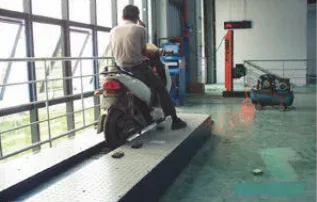
A motorcycle inspection line is organized around the inspection items for two- and three-wheel motorcycles: safety items such as braking, wheel load, and wheel deviation, plus speedometer, emissions, lighting, and sound-level checks, all completed in sequence on one line with data acquired and determined centrally.
Chassis dynamometry
The chassis dynamometer is the core machine for motorcycle power performance testing: the wheel runs on rollers while the machine measures drive-wheel output and speed behavior, and it can support emissions testing as well. Single-roller and double-roller constructions fit different models and test requirements.
Station coordination and control flow
Every station operates under one control flow: after registration, the vehicle enters each station in the defined order, inspection data passes continuously between stations, and results are determined and output centrally. The number of stations and the equipment combination can be configured for the vehicle range and required throughput.